
Langfang Trade Fair Signals Smarter Office Buying




From June 16 to 18, 2026, the China Langfang International Economic and Trade Fair held its procurement matchmaking sessions, drawing more than 700 overseas buyers and putting the spotlight on mechatronics, high-tech products, and smart office systems. For exporters, system integrators, equipment makers, and procurement teams, the key point is not only which products were named, but how buyers from the United States, Vietnam, and India framed demand around protocol compatibility and localized voice interaction.
What the procurement sessions specifically highlighted
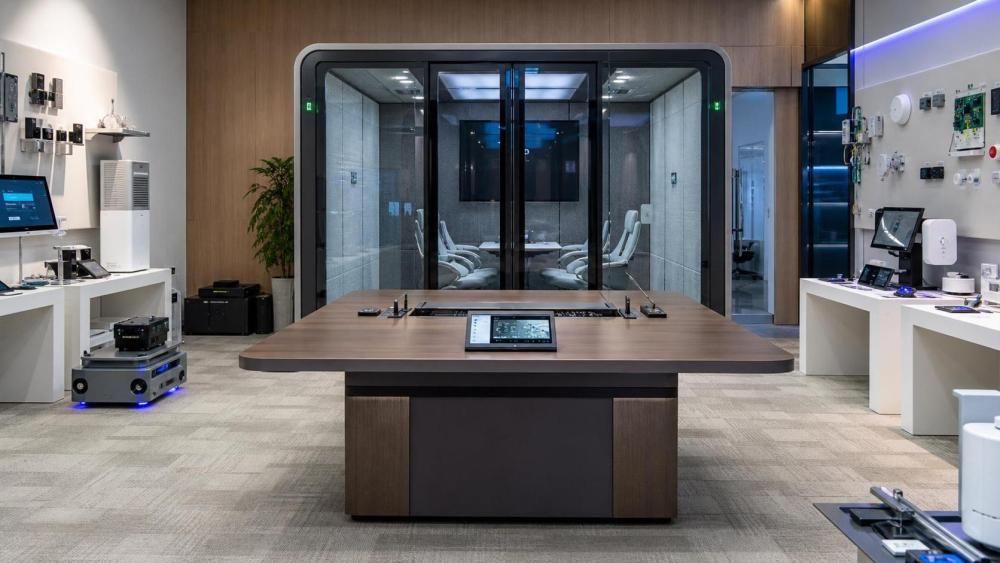
The confirmed focus of the mechatronics and high-tech segment included AI smart equipment, intelligent logistics equipment, and smart office systems such as Multimedia Conference Tables and Ventilated Meeting Pods. These office-related products were described as combining IoT functions with acoustic control.
The event information also stated that buyer groups from the United States, Vietnam, and India explicitly asked for support for BACnet and Modbus protocols together with localized voice interaction. The procurement matchmaking sessions took place during June 16–18, 2026, as part of the 2026 China Langfang International Economic and Trade Fair.
Why this matters across the supply chain
Product exporters face a more technical buying brief
From an industry perspective, exporters in smart equipment and office system categories may be affected because overseas demand is being expressed in terms of interoperability and user-interface requirements, not only core hardware. The business impact is likely to appear first in quotation preparation, product specification alignment, and pre-sales communication.
Manufacturers need to watch integration readiness
Analysis shows that manufacturers of conference furniture, pods, control systems, and related intelligent equipment should pay attention to whether their products can fit into broader building or office control environments. The mention of BACnet and Modbus makes technical compatibility a practical point in product planning, documentation, and delivery coordination.
Service providers may see stronger demand for solution packaging
For integrators and related service providers, the shift described in the event summary suggests that procurement may increasingly involve solution design, interface matching, and localized interaction support. What deserves closer attention is how this changes the scope of bidding, project communication, and post-sales support expectations.
What companies should track now
Protocol support must be communicated clearly
Companies targeting these buyer groups should closely review how BACnet and Modbus support is described in product materials, technical sheets, and client communication. In this context, unclear wording can become a commercial issue, not just a technical one.
Localized voice interaction moves into the purchasing checklist
The explicit request for localized voice interaction means suppliers should pay attention to how local-language operation is presented during negotiations and solution discussions. This is especially relevant where the offering is positioned as a complete office system rather than a single device.
Category focus should guide near-term business prioritization
AI smart equipment, intelligent logistics equipment, Multimedia Conference Tables, and Ventilated Meeting Pods were directly highlighted in the event summary. Companies active in these categories should watch for follow-up signals in buyer communication, sample requests, and specification matching, rather than treating all smart hardware demand as identical.
Delivery preparation may need more cross-functional input
Observably, when procurement shifts toward integrated solutions, preparation often extends beyond sales teams alone. Firms should pay attention to whether product, technical, documentation, and service teams are aligned when responding to overseas inquiries tied to interoperability and localized use scenarios.
How to read the signal at this stage
Analysis shows that this development is better understood as a market signal than as a completed shift with fully verified outcomes. The confirmed facts do show that overseas buyers at this event articulated demand in a more system-oriented way, especially in smart office applications where IoT, acoustic control, protocol compatibility, and localized interaction intersect.
At the same time, it is more appropriate to understand this as an early indicator that requires continued observation. The event summary points to changing procurement preferences, but it does not by itself confirm how broadly or how quickly those preferences will translate into finalized orders, repeat purchasing patterns, or category-wide standards.
What this development currently suggests
For the industry, the immediate significance lies in the wording of demand: buyers are identifying not just product types, but integration conditions. That makes this update relevant to manufacturers, exporters, integrators, and procurement service teams involved in smart office and related equipment categories.
At present, it is more appropriate to understand the Langfang procurement matchmaking sessions as a practical indication that some overseas demand is moving from stand-alone hardware toward system-level solutions. Whether that becomes a wider and lasting pattern still needs to be tracked through subsequent procurement activity and follow-up market signals.
Basis of this article
This article is based on the user-provided news title, event date, and event summary related to the 2026 Langfang procurement matchmaking sessions. No specific official source link was provided in the input, so any official release, organizer notice, buyer statement, industry association information, authoritative media coverage, or relevant standard-organization document should be further verified on an ongoing basis.
For continued observation, the main points to watch are whether later official communications provide more detail on procurement requirements, whether protocol and localization demands appear repeatedly in similar events, and whether the shift toward integrated smart office solutions is reflected in subsequent transaction and project language.
Related News
- How to Choose Multimedia Conference Tables for More Effective Hybrid MeetingsAug 26, 2026Multimedia Conference Tables for hybrid meetings: learn how to choose the right shape, cable management, power access, and acoustics to improve collaboration and avoid costly mistakes.
- How to Evaluate a Flip-Top Conference Tables Supplier for Large Meeting SpacesAug 14, 2026Flip-top conference tables supplier guide: learn how to evaluate stability, mobility, cable access, and customization for large meeting spaces.
- How to Choose Smart Conference Furniture for Offices That Supports Hybrid MeetingsAug 05, 2026Smart conference furniture for offices starts with meeting needs, camera angles, and cable access. Learn how to choose flexible, serviceable solutions that improve hybrid meetings.
- How to Choose Modular Conference Room Furniture for Flexible Team Layouts?Aug 04, 2026Conference room furniture modular buying guide: learn how to compare layouts, reset speed, cable management, durability, and storage to choose flexible meeting spaces that work better.
Related News
- 00
0000-00
How to Assess Office Furniture Surface-Finishing Suppliers for Durability and Compliance - 00
0000-00
How Open-Plan Workplace Design Can Improve Productivity Without Raising Noise - 00
0000-00
Commercial Office Desk Procurement: A Checklist for Hybrid Workplace Projects - 00
0000-00
How to Evaluate a Commercial Lounge Furniture Manufacturer for High-Traffic Projects - 00
0000-00
Office Furniture Compliance Requirements: A Facility Manager’s Checklist
Weekly Insights
Stay ahead with our curated technology reports delivered every Monday.