
EU Requires VOC Testing for PET Acoustic Dividers




The EU will begin enforcing EN 17173-2:2026 on October 1, 2026, making VOC emissions testing and a declaration of conformity a clearance requirement for imported PET-based acoustic office partitions, including PET acoustic desk dividers. For exporters, importers, manufacturers, and supply chain teams serving the EU market, this is not just a standards update; it directly affects certification timing, customs documentation, and shipment readiness.
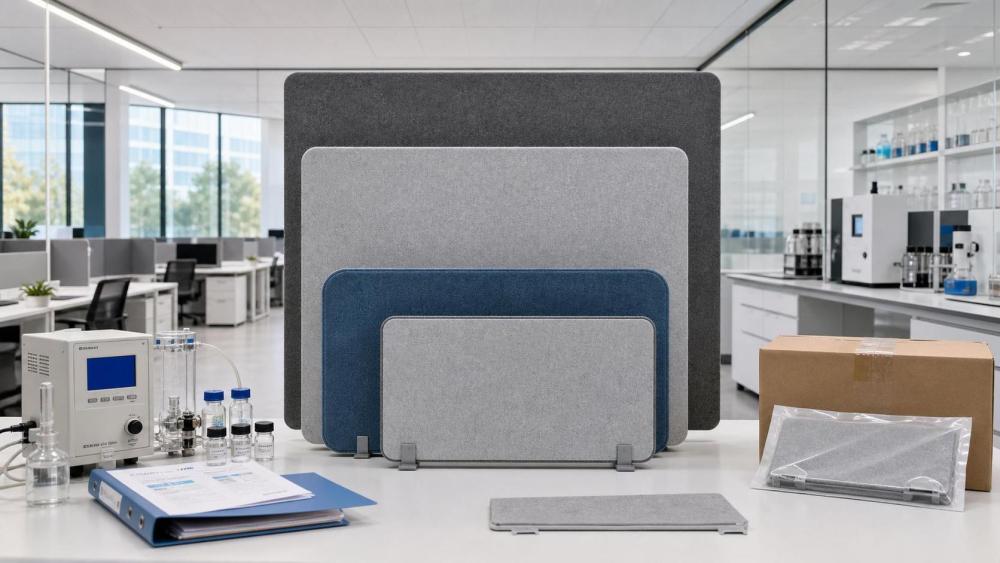
What the new requirement confirms
According to a notice published in the Official Journal of the European Union (OJEU) on July 14, 2026, EN 17173-2:2026 becomes mandatory on October 1, 2026. The requirement applies to PET-based acoustic office partitions imported into the EU, including PET acoustic desk dividers.
Under the stated requirement, affected products must complete third-party VOC emissions testing and be accompanied by a declaration of conformity. The information provided also states that goods failing to meet the requirement will be refused entry into the EU.
Where the pressure will be felt first
Export-facing manufacturers will need to adjust release timing
From an industry perspective, manufacturers producing PET acoustic partitions for EU-bound orders may be affected first because compliance is tied to whether goods can clear customs. The main pressure point is the pre-shipment stage, where testing completion and supporting documentation become part of delivery readiness.
Chinese exporters will see changes in certification and filing workflows
Analysis shows that Chinese exporters are directly exposed because the requirement changes the product certification path referenced in the input information. The most immediate areas of impact are likely to be document preparation, coordination with testing bodies, and alignment between sales commitments and compliance lead times.
Supply chain and customs teams will need tighter document control
Observably, logistics coordinators, customs staff, and related service providers may be affected because customs clearance now depends on whether the shipment includes the required test outcome and declaration of conformity. Their focus will likely shift toward document completeness, consistency across shipment files, and timing control before goods depart.
EU buyers and procurement teams may raise compliance checks earlier
What deserves closer attention is that procurement-side scrutiny may move upstream. Buyers sourcing PET acoustic desk dividers or related office acoustic partition products for the EU market may pay closer attention to whether suppliers can demonstrate readiness before shipment, especially where delivery schedules are tight.
What companies should watch now
Track whether official wording changes in implementation practice
Analysis shows that the mandatory date is clear, but companies should still watch how the requirement is referenced in actual transaction and clearance workflows. The practical issue is whether all internal and external documents consistently reflect the same compliance basis before shipment.
Review which SKUs fall within the affected product scope
Businesses dealing in PET-based acoustic office partitions should verify which exported product lines fall within the described scope, including PET acoustic desk dividers. This matters because classification at the product level will shape testing arrangements, documentation needs, and shipment planning.
Rebuild delivery schedules around testing lead time
Observably, testing is no longer a background compliance step for affected products. Because the input information specifically notes an impact on testing cycles, companies should pay closer attention to how sampling, third-party testing, document issuance, and dispatch timing connect to customer commitments.
Prepare customer and broker communication in advance
What deserves closer attention is the handoff between supplier, customer, and customs-related service providers. Companies may need clearer communication on what documents will be provided, when they will be available, and how shipment timing may change if testing or conformity paperwork is incomplete.
Why this reads as more than a routine update
As an editorial observation, this development is better understood as an operational compliance signal rather than a symbolic standards notice. The mandatory date is fixed in the provided information, and the stated consequence for non-compliant goods is refusal of entry. That makes the issue immediately relevant to order execution, not just long-term regulatory monitoring.
At the same time, it is still appropriate to view the broader market effect with caution. The confirmed facts establish a binding requirement for the covered products, but the wider commercial impact on supplier behavior, customer screening, and testing capacity still needs ongoing observation rather than assumption.
How the market is likely to read it for now
The industry significance of this update lies in its direct link between product compliance and customs clearance for PET-based acoustic partitions entering the EU. It is more appropriate to understand this as a near-term operational requirement with longer-term signaling value for exporters and supply chain partners serving regulated markets.
A cautious reading is warranted: the rule itself is confirmed in the provided information, while the full extent of downstream business adjustments will become clearer through implementation. For now, the priority is not broad speculation, but practical readiness around testing, declarations, and shipment documentation.
Basis of this article and what still needs verification
This article is based on the user-provided news title, the stated effective date of October 1, 2026, and the supplied event summary regarding the OJEU notice published on July 14, 2026 and the mandatory implementation of EN 17173-2:2026 for covered PET acoustic office partitions.
For this type of industry update, source categories typically relevant to further verification include official notices, standard-related documents, enterprise compliance communications, industry association updates, and reporting by authoritative trade media. A specific official source link was not provided in the input, so the exact source document link still requires continued verification. Follow-up attention should remain on any further official wording, scope clarification, and implementation details that affect testing, declarations of conformity, and customs filing practice.
Related News
- China Tightens Export Inspection for Office Acoustics: PET Dividers and Booths Need NRC ReportsAug 14, 2026China tightens export inspection for office acoustics. PET dividers and booths now need NRC reports, so exporters can avoid delays and clear customs faster.
- EU PPWR Takes Effect Aug. 12, EPR Filing Now RequiredAug 11, 2026EU PPWR takes effect Aug. 12, making packaging EPR filing essential for EU-bound office furniture. Learn how to protect listings, customs clearance, and delivery compliance.
- REACH SVHC Update Triggers PET Divider RetestingAug 10, 2026REACH SVHC update triggers PET divider retesting as three phthalates hit the Candidate List. Learn the 90-day compliance risks, testing actions, and EU market impact.
- CPSC Rule Sets Dual PET Divider ThresholdsAug 08, 2026CPSC Rule Sets Dual PET Divider Thresholds: learn how new U.S. rules for PET acoustic desk dividers impact NRC ratings, formaldehyde limits, compliance documents, and market access.
Related News
- 00
0000-00
How to Evaluate a Commercial Lounge Furniture Manufacturer for High-Traffic Projects - 00
0000-00
Office Furniture Compliance Requirements: A Facility Manager’s Checklist - 00
0000-00
How Smart Office Furniture with Booking Improves Shared Workspace Utilization - 00
0000-00
Chair Comfort Testing: Metrics That Predict All-Day Support in Office Seating - 00
0000-00
Workplace Sedentary Health Solutions: Designing Movement Into Daily Work
Weekly Insights
Stay ahead with our curated technology reports delivered every Monday.